
The University of Chicago Press is offering a free electronic version of Peter Shane’s 2009 book Madison’s Nightmare: How Executive Power Threatens American Democracy.
Shane is always worth a read. And it’s hard to argue with the premise.
The University of Chicago Press is offering a free electronic version of Peter Shane’s 2009 book Madison’s Nightmare: How Executive Power Threatens American Democracy.
Shane is always worth a read. And it’s hard to argue with the premise.
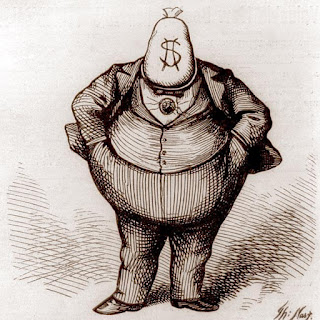 The biggest local scandal of the week isn’t that a key witness in the latest David Rivera corruption case has vanished — shortly after being seen speaking with Congressman Rivera himself. That’s a doozy, but, no, the biggest scandal is a ballsy ripoff of insurance premiums paid in by Florida homeowners to state-sponsored home-insurer-of-last-resort Citizens Insurance Co. that is to be repurposed for the benefit of Republican crony capitalists.
Yes, while the Miami Herald front page was trumpeting the putative end of a relatively trivial abuse — top officials at Citizens Insurance were treating the travel budget as an unlimited personal extravagance fund — the real ripoff, one more than a thousand orders of magnitude larger, was being reported inside the paper.
A little background before the, ahem, money quote. Private insurance companies with actual capital, the ones that advertise on TV (Allstate, GEICO), won’t write homeowners insurance in much of Florida because they are too afraid they might have to pay out if a hurricane struck. To fill this void, the state of Florida created a back-up insurance company called Citizens. Citizens is far from perfect: it started out vastly undercaptialized, its customer service is lousy, and its rates are have always been high. But despite all these, it represents a deadly threat to the Republican world view because it is an example of government stepping in and solving a problem.
In the past few years the Citizens management, appointed by Republican Governors, has followed the following strategies:
It so happens, however, that the weather has been kind. And thanks to its ferocious rate increases, Citizens faced the terrible prospect of solvency this year. Having said for many years that it would need at least $6 billion in reserves to deal with an Andrew-sized disaster, Citizens reached that goal. Only someone who did not understand the Florida GOP would think that Citizens would react by cutting prices, or at least halt price increases. No, rather than congratulate themselves on their fiscal prudence, the Citizens board decided it would raid the piggy bank — or rather, hand over parts of it in gifts to its well-connected friends.
Here’s the money quote I promised you:
Citizens would take capital from its record $6.2 billion reserves and lend it — under favorable terms — to private insurers who agree to take over policies and keep them for 10 years.
The 20-year loans require interest-only payments during the first three years and are forgivable, in part, if hurricanes hit the state. Citizens acknowledges that the interest rate of about 1.6 percent “does not approximate the true market rate” for similar loans and that Citizens could be left unpaid if an insurer goes belly up after receiving a loan.
Critics, including several state lawmakers, called it a “sweetheart deal” for insurance companies and “corporate welfare” funded by the premiums collected from Citizens’ customers over the past several years. With no hurricanes hitting the state since 2005, Citizens has saved up a massive treasure chest of $6.2 billion, money that private insurers find attractive.
“I sat here and listened to the board today give out one of the biggest bailouts. Corporate welfare, I call it,” fumed Sen. Mike Fasano (R-New Port Richey), blasting Citizens for quickly approving the controversial plan without legislative input.
The plan, which was unveiled to the public on Thursday, was approved by the board on Friday in a unanimous vote.
Got that? Loan the money at below-market rates to unercapitalized private insurers on the grounds that by taking over some Citizens policies they reduce Citizens’s risk. But if in fact the private companies have to pay out — the risk that Citizen is supposedly reducing — then they can keep the money! So Citizens’s risk isn’t reduced at all…or at least not very much (depending on the details). This is not only immoral, but a vast dereliction of the fiduciary duty to the state and to the insured. But that’s business in Tallahassee. I bet we’ll see some of these new insurance company moguls on TV explaining how they built their own businesses, and complaining about how hard taxes make it for them to be entrepreneurial.
And let’s not forget this bit from the other day:
The proposal mirrors one presented in July by a lobbyist for Tower Hill Insurance, which currently insures more than 300,000 policies in Florida. Tower Hill and another insurer that lobbied for the program have already indicated that they would take over more than 180,000 policies if Citizens provides a multimillion-dollar incentive.
Tower Hill and other insurers interested in receiving a low-interest loan funded by Citizens’ surplus have committed to raising rates no more than 10 percent per year during the loan’s interest-only first three years. After that, rates could go up further.
…
“The insurance companies have hit the lottery,” said Rep. Frank Artiles, R-Miami. “They get no competition, they circumvent the Legislature and they get exactly what they want. “This is a classic Tallahassee get-rich-scheme that has bitten us in the butt before.”
Artiles contended that the program’s eligibility rules were written in ways that exclude all but a few privileged insurers, which are represented by Florida lobbyists.
But of course. No wonder the public got one day’s notice of the plan before it was rushed through.
I was very struck by this story from the periphery of the Democratic National Convention in Charlotte, Protester jailed, denies he’s a terrorist, in which a local police officer argued that an arrested protestor should be held without bail during the convention because he was on an (unspecified) national terrorist watch list — probably this one.
As far as I am aware, this is the first documented example of a non-air-travel-related domestic consequence of being on a ‘terrorist watch list’:
Tyson, who describes himself on his Facebook page as a carpenter with a “veggie farm,” says he has no idea how he wound up on the government’s terrorist watch list. He just wants to save the rain forest. The only dings on his record, at least as far as he knows, consist of fishing for trout out of season and driving while impaired.
The 27-year-old, known as “Jimmy” around Charlotte’s activist community, was pulled over Sunday near a building where protesters plan their demonstrations. He was charged with driving with a revoked license. And then he was thrown in jail under exceptionally high bail — $10,000.
The arresting officer asked a magistrate to keep him behind bars for the duration of the Democratic National Convention, which ends Thursday night. He advised against releasing Tyson on his promise to show up for court.
“Why do you feel suspect is a risk?” a bail sheet asked, and the officer wrote: “Known activist + protester who is currently on a terrorist watch list. Request he be held due to DNC being a National Special Security Event.”
I should note that from one prespective the system did work, after some delay.
Tyson spent Sunday night and most of Monday in jail. He called a legal hot line for protesters and was given an attorney, Derek Fletcher. The Charlotte lawyer got before a judge, Lisa Bell, on Monday and convinced her to lower Tyson’s bail to $2,500. He walked free on Monday night.
On the other hand, speech was chilled:
“I have done nothing wrong and have nothing to hide,” Tyson said as he left the Mecklenburg County Jail. “I believe this is an attempt to stifle my First Amendment rights and keep my voice from being heard.”
He said he was no longer interested in protesting during the convention, believing police had targeted him. “At this point,” he said, “I would like to go home and visit my parents and play with my dog.”
If the CNN article by Ted Metzger and Ann O’Neill is accurate, I think this small incident is actually a big deal.
 Could be fun:
The University of Miami will test its ability to respond to a significant public health emergency by conducting a drill of its new closed Point of Dispensing (POD) plan on Monday, September 17 from 1:30 to 3:30 p.m. in the Whitten University Center’s Flamingo Ballrooms. The POD plan is designed to efficiently distribute, in a limited timeframe, medication to all members of the University community and their families in the event of a health emergency.
In an effort to engage students, the exercise will incorporate a popular theme: zombies. The scenario, a part of “Zombie U” preparedness month, will entail an outbreak of the fictitious zombie-causing Solanum virus and the dispensing of Zombivir (Sour Patch Kids) and Fishivir (Swedish Fish) countermeasures.
Students, faculty, staff, and other members of the University community are encouraged to stop by and participate in the POD exercise. All participants will be entered into drawings for various prizes including emergency preparedness supplies.
The University of Miami’s Office of Emergency Management, in partnership with the Miami-Dade County Health Department, Miami-Dade County Medical Reserve Corps-University of Miami Response Team, UHealth, the Miller School of Medicine, William Lehman Injury Research Center/TeleTrauma, and the Rosenstiel School of Marine and Atmospheric Science, will lead the exercise.
For more information, visit www.miami.edu/prepare or contact John Pepper, emergency manager, at 305-243-9466 or jpepper@med.miami.edu.
— Help UM Test its Ability to Respond to a Public Health Emergency
Photo © My name is Randy. Some rights reserved.
Bob Kohn opposes the DOJ’s proposed ebook pricing settlement with three book publishers. District Judge Denise Cote granted him leave to intervene as an amicus — but wouldn’t take his a 55-page brief. She gave him leave to file only five pages.
Kohn responded with the most unusual amicus brief I’ve ever seen: a comic strip. And it makes his point.
Here, if the embedding works, is the full text.
(Spotted via EFF’s James S. Tyre’s posting to a mailing list.)
Visiting the New York Times online dining section in order to link to What Restaurants Know (About You) for my seminar on ‘Regulation of Identification’, I get this popup:
Google has disabled use of the Maps API for this application. This site is not authorized to use the Google Maps client id provided. If you are the owner of this application, you can learn more about registering URLs here: https://developers.google.com/maps/documentation/business/guide#URLs
Coding error? NYT not paying its bill? The message popped up at the front page of a section, so it’s hard to see the NYT failing to have registered it.
 Recent Bluessky Posts
 Jotwell Blenderlaw