
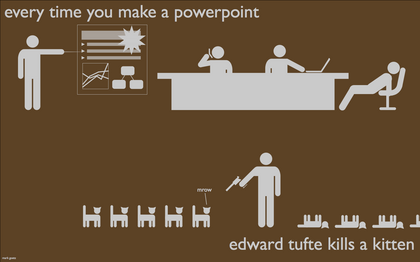
(From Mark Goetz, My new wallpaper)
Chiles to run for Fla. governor. That's Lawton Chiles III, son of the legendary walkin' governor. And he's running as an independent, making it a three-way race.
Lawton Chiles III announced Thursday he would run for governor of Florida as an independent, setting up a potential three-way race in November.
Chiles, the son of the former Democratic governor and senator of the same name, told reporters in Tallahassee that he would accept only small contributions and that he would not take funds from political action committees.
Chiles ran in 2006 as a Democrat…and had to withdraw because he had not lived in Florida long enough to meet the state law residency requirement.
I suppose the idea behind this run as an independent is to squeeze the Democratic vote and add in what there is of the sensible Republican vote and hope it makes the biggest pile.
Or is the plan to ride on Crist's coattails? Will there be coattails?
So, what does Chiles stand for? Children, it seems. Hard to find much else so far.
Even so, the Florida Governor's race could use some livening up, as it currently seems likely to feature two unexciting candidates, Sink and McCollum. Neither has their party's nomination yet, however, and both are being challenged in primaries by somewhat weird multi-millionaires. And on the Republican side, Rick Scott (the less sleazy and more extreme of the two millionaires) is making enough gains thanks to a bottomless-pocket self-financed TV ad campaign that McCollum must be sweating.
So maybe that's the Chiles strategy (if there is one): if Rick Scott wins the GOP nomination, there could be more than a few Republicans looking for an alternative and their number could be added to Democrats unenthusiastic about Sink. Whether a former Democrat could provide an alternative Republicans would swallow is unclear, but this is a weird state and a weird year. Plus the Chiles brand has some nostalgia value in Florida.
On the other hand, Democratic concerns about Sink are either that she's dull, or that she's too right-wing; running to her left won't pick up any Republicans; running to her right won't pick up many Democrats as there isn't that far to her right among the Democratic party mainstream. There are, though, all those independents, and in a three-way race it takes less to win….
Progress Florida has launched SpillBabySpill, a website dedicated to BP's man-made environmental catastrophe and especially its effects on Florida.
Admirable work, but depressing to read.
You may want to know that a full-text RSS feed of discourse.net is available.
I mention this because I've noticed that despite the full-text always having been available, the majority of subscribers to my RSS feed use the abbreviated posts version for some reason.
I wonder if that's because the short version is listed first and auto-discovery thus gravitates towards it? Or do people really prefer truncated posts?
Maybe I'm too long-winded for the Twitter era.
Kevin Jon Heller has an interesting post trying to work out whether Israel's blockade of Gaza is legal.
One key question is whether the dispute between Israel and Hamas is of an international character.
If the conflict between Israel and Hamas is an international armed conflict (IAC), there is no question that Israel has the right to blockade Gaza. (Which is not to say that the manner in which Israel is blockading Gaza is legal. That’s a different question.) The 1909 Declaration Concerning the Laws of Naval War (the London Declaration), the first international instrument to acknowledge the legality of blockades, specifically recognized the right of belligerents to blockade their enemy during time of war. Article 97 of the San Remo Manual does likewise. And there is certainly no shortage of state practice supporting the legitimacy of blockades during IAC (the US blockade of Cuba, for example).
If it is not IAC — e.g. because Hamas/Gaza is not a state — then it turns out that the relevant international law seems pretty darn sparse.
The London Declaration does not justify such a blockade, because it only applies to “war”– war being understood at the time as armed conflict between two states. Does the San Remo Manual justify it? The Manual is not a picture of clarity concerning when its rules apply, but it does not seem to contemplate non-international sea conflicts. …
There also appears to be little, if any, state practice to support the idea that a blockade is legally permissible in NIAC
And there's a third option:
There is, however, another possibility: that Israel's blockade of Gaza is not a “belligerent blockade” at all, but is instead something akin to a “pacific blockade,” defined by the Dictionary of International Law as “a form of coercive measure short of war, whereby a state (or group of states) bars access to the coast of a state or part of it in order to prevent entry and exit of ships of the state under blockade.” I say “akin to” a pacific blockade, because — as the definition indicates — such blockades assume that the blockaded entity is a state, not a non-state actor. Even if Israel’s blockade of Gaza would analogically qualify as a pacific blockade, however, it would still be of questionable legality: pacific blockades are only legal with the approval of the Security Council, according to the Dictionary of International Law, and the Security Council has never approved the blockade of Gaza.
Prof. Heller suggests, very tentatively, that none of these three options justifies Israel's blockade. A commentator cites a US civil war precedent, but I am not clear how it would apply given that Israel does not claim the Gaza strip as domestic territory.
Personally, the second option seems like the most plausible argument for the Israeli government: even if the precedents for blockades in non-international armed conflicts are sparse, it does seem consistent with the evolving law regarding state responses to non-state belligerents. (That's a positive, not normative, claim, folks.) But I am anything other than well-informed in this area.
WebMD recites Best Sunscreens: A Consumer Reports Ranking and lists the top four choices by what it considers effectiveness and price.
Unfortunately, all three of the ones for which I've been able to find online lists of ingredients (Target doesn't seem to post them) appear to contain Oxybenzone, which reports on a recent FDA study say may increase cancer risk rather than lower it.
So, what is the best sunscreen to slather on the kids this summer?
Update: (6/6): My friend Joel points me towards the Environmental Working Group's 2010 Sunscreen Guide.
 Recent Bluessky Posts
 Jotwell Blenderlaw