Author Archives: Michael Froomkin

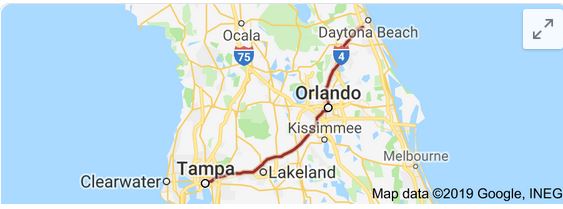
Florida’s Political Fulcrum: the I-4 Corridor

Master Florida psephologist Steve Schale does a deep dive as to why the road to winning Florida is the I-4 corridor (that’s the Orlando to Tampa link in the middle of the state).  The rest of us, it seems, are fairly predictable. Another nugget: some of the swing vote in the I-4 area are transplantees from the mid-West. (Does that make it Biden country?)

Posted in 2020 Election, Florida | Comments Off on Florida’s Political Fulcrum: the I-4 Corridor

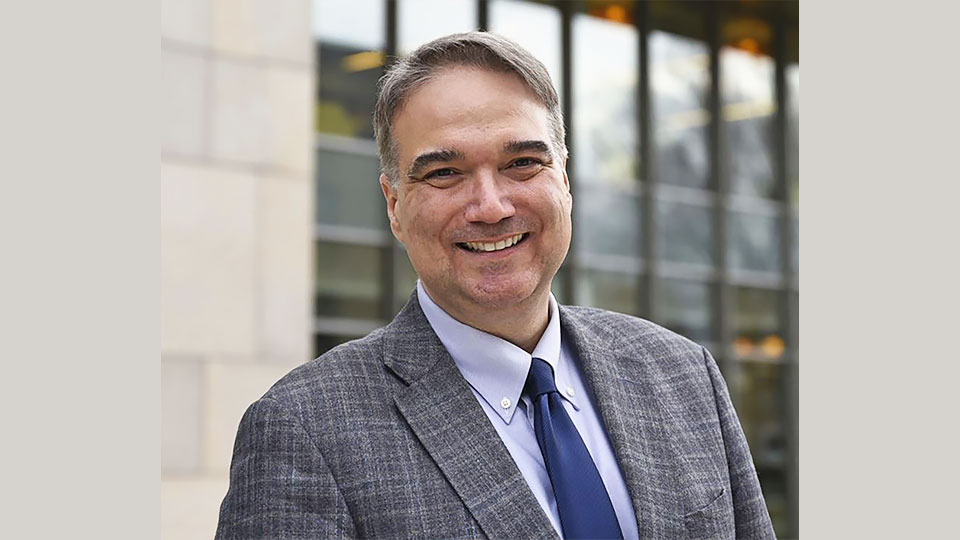
Anthony Eudelio Varona Will Be MiamiLaw’s Next Dean

I’m very excited to announce the identity of our new Dean, who will take over in less than two months: Anthony Eudelio Varona, currently of American University.  Tony comes to us with a great deal of energy, ideas — and a local connection.

Here’s the official announcement from our Provost, Jeffrey L. Duerk:

June 11, 2019
To the University of Miami Community:

I am thrilled to share that Anthony Eudelio Varona, an attorney and educator who specializes in administrative law, communications and media law, and sexuality and gender law, has been named the new dean at the School of Law, effective August 1.

Tony is currently professor of law at American University Washington College of Law, where he teaches contracts, administrative and public law, and media law. He has been with American University Washington College of Law since 2005, serving two years as vice dean, associate dean for faculty and academic affairs for six years, and also serving as the Doctor of Juridical Science program director and a member of the faculty review/advisory boards of the Administrative Law Review and the Journal of Gender, Social Policy & the Law. Tony has also acted as faculty advisor to the Latino/a Law Students Association and the Lambda Law Society. He entered teaching full-time as an associate professor of law at Pace University School of Law in 2002.

Tony serves on the national board of directors for Stonewall National Museum and Archives (SNMA), for which he co-founded and for its first year co-chaired the SNMA National Advisory Council. Before entering academia, he spent nearly five years as as chief counsel and then general counsel and legal director for the Human Rights Campaign (HRC), the nation’s largest LGBTQ civil rights organization. He represented HRC and the HRC Foundation in various coalition work groups, including the Leadership Conference on Civil Rights judicial nominations task force.

Earlier in his career, he was an associate at Skadden Arps and Mintz Levin, and an honors program enforcement attorney at the Federal Communications Commission.

Tony is a consummate and respected professional in the area of law, and is immersed in critical issues impacting our country and culture. His insightful and innovative approach to educating the next generation of lawyers will have a profound impact on the School of Law and in courtrooms across the country.

Born in Cuba, he left the island with his mother and grandparents at age 3, settling for a short time in Spain before the family reunited with his father in Newark, New Jersey. He has family in South Florida and visits the Miami area frequently.

Tony earned his Juris Doctor from Boston College Law School, where he worked as a student attorney at the Greater Boston Legal Services-affiliated poverty law clinic BC Legal Assistance Bureau in Waltham, Massachusetts, and later earned a Master of Laws from Georgetown University Law Center with a focus in civil rights and civil liberties. He received his Bachelor of Arts in political science and French from Boston College.

I would like to once again thank Dean Trish White for her decade of visionary leadership at Miami Law.

A special thank you goes to the members of the search committee, led by Business School Dean John Quelch, for their focused effort and great work in identifying and recommending the ideal candidate.

Please join me in welcoming Tony to the University of Miami.

Jeffrey L. Duerk, Ph.D.
Executive Vice President for Academic Affairs and Provost

Posted in Law School, U.Miami | Comments Off on Anthony Eudelio Varona Will Be MiamiLaw’s Next Dean

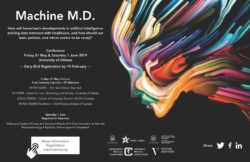
Machine M.D. in Ottawa

I’m in Ottawa today for the Machine M.D. conference.  My panel, on “Regulating Health and Safety” started at 8:30am, so now that it’s over I get to enjoy the rest of the very packed schedule.

(I’m missing the also wonderful annual Privacy Law Scholars conference to be here, an example of the difficulties in trying to write in, and keep up in, multiple areas even within technology law.)

My argument in my talk was that, contrary to a number of articles by others that are now in press, we don’t want a super-AI regulator, but rather need to find a way to strengthen the AI capacity of existing sectoral regulators like the FDA, NHTSA and many others.  The exception(s) to this general rule arise(s) only if the AI aspect of a regulatory question predominates over the sectoral — something I argue is rare, and probably limited to issues regarding access to data, to data quality, to job losses due to AI, and possibly to the regulation (or at least liability for) AI emergent behavior.

Unsurprisingly, some members of the audience, many of whom are health professionals, pushed back against the idea that when it comes to AI health really isn’t all that different from transport, finance, sentencing, or other predictive profiling applications. A polite discussion — we are after all in Canada — ensued.

Posted in AI, Talks & Conferences | Comments Off on Machine M.D. in Ottawa

What Scares Floridians

Has poisonous scaly spines, belongs on the list.

Steve Schale, who usually writes informed wonky stuff about Florida politics, took a break to write about Things that scare Floridians, sort of ranked. Example:

Driving.    As my friend Tom Eldon says, Floridians drive as though they are a complete peace with God.  Others have suggested that turn signals here are a sign of weakness.  Florida interstates are kind of a bad combo of Mad Max, Survivor, and Seinfeld.   I’ve driven in some unique foreign places, and well, I’ll take most over I-4.   Add into it 100 million tourists a year, and yeah, Floridians know driving here is bad.

For my money, the whole list pretty much nails what it covers, but he left out lion fish and Portugese Man-of-wars, both of which at least ought to be on the ‘Tiny bit scared of’ list, and he exaggerates by about ten degrees Fahrenheit on the temperature thing.  We can handle 55 degrees in the Winter, no problem.

Posted in Florida | Comments Off on What Scares Floridians

Memo to Self: How to Get Multi-Level Outlines in Word to Work Like I Expect

There are lots and lots of things about Word that drive this long-time WordPerfect user nuts. Turns out there’s a fix for one of them: Tab Key Does Not Change List Level in Microsoft Word.

The fix is buried deep inside the options page.  Really deep.  But toggle the right option and at least there’s one less annoyance.

Posted in Software | Comments Off on Memo to Self: How to Get Multi-Level Outlines in Word to Work Like I Expect

I’ve Joined the Editorial Board of the Technology & Regulation Journal

I’m proud to be part of the editorial board committee of the brand new Journal of Technology and Regulation (TechReg), housed at the Tilburg Institute for Law, Technology, and Society (TILT) at Tilburg University in the Netherlands.

Technology and Regulation (TechReg) is an international journal of law, technology and society, with an interdisciplinary identity. TechReg provides an online platform for disseminating original research on the legal and regulatory challenges posed by existing and emerging technologies (and their applications) including, but by no means limited to, the Internet and digital technology, artificial intelligence and machine learning, robotics, neurotechnology, nanotechnology, biotechnology, energy and climate change technology, and health and food technology. We conceive of regulation broadly to encompass ways of dealing with, ordering and understanding technologies and their consequences, such as through legal regulation, competition, social norms and standards, and technology design (or in Lessig’s terms: law, market, norms and architecture).

We aim to address critical and sometimes controversial questions such as:

  • How do new technologies shape society both positively and negatively?
  • Should technology development be steered towards societal goals, and if so, which goals and how?
  • What are the benefits and dangers of regulating human behavior through technology?
  • What is the most appropriate response to technological innovation, in general or in particular cases?

It is in this sense that TechReg is intrinsically interdisciplinary: we believe that legal and regulatory debates on technology are inextricable from societal, political and economic concerns, and that therefore technology regulation requires a multidisciplinary, integrated approach. Through a combination of monodisciplinary, multidisciplinary and interdisciplinary articles, the journal aims to contribute to an integrated vision of law, technology and society.

We invite original, well-researched and methodologically rigorous submissions from academics and practitioners, including policy makers, on a wide range of research areas such as privacy and data protection, security, surveillance, cybercrime, intellectual property, innovation, competition, governance, risk, ethics, media and data studies, and others.

TechReg is double-blind peer-reviewed and completely open access for both authors and readers. TechReg does not charge article processing fees.

Posted in AI, Personal, Readings | Comments Off on I’ve Joined the Editorial Board of the Technology & Regulation Journal