Author Archives: Michael Froomkin

Uh-oh

capture

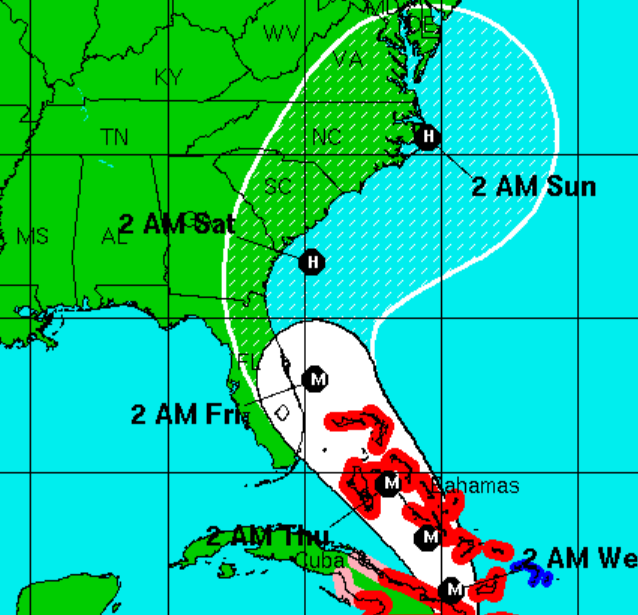
Tropical storm and/or hurricane watches are likely for portions of the Florida peninsula and Florida Keys later this morning.

The track of Hurricane Matthew has been drifting west as the northward motion slows.  Currently poor Haiti is under it.  If the track doesn’t drift West any more, Miami should be fine….but if it does shift a bit more West…this is a very big and nasty hurricane.

Posted in Miami | Comments Off on Uh-oh

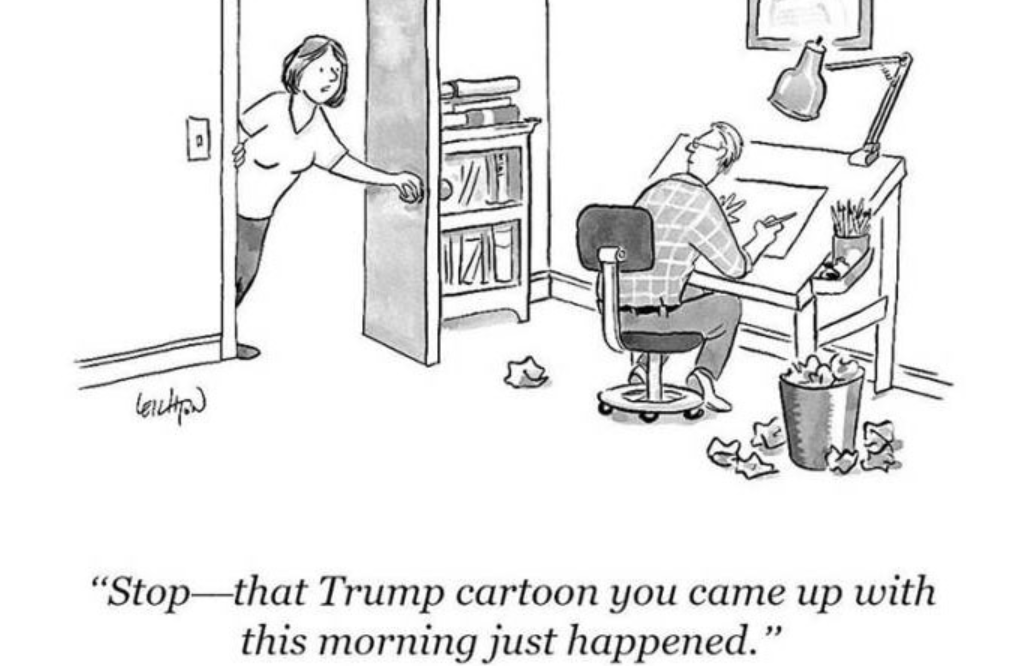
Our Reality

capture

Posted in 2016 Election | Comments Off on Our Reality

We Robot 2017 Now Accepting Paper Proposals

We Robot 2017—Call For Papers

We invite submissions for the sixth annual robotics law and policy conference—We Robot 2017—to be held at Yale Law School in New Haven, Connecticut on Mar. 31–Apr. 1, 2017. In past years, the conference has been held at University of Miami School of Law, University of Washington School of Law, and Stanford Law School. The conference web site is at http://werobot2017.com.

We Robot 2017 seeks contributions by academics, practitioners, and others in the form of scholarly papers, technological demonstrations, or other projects. We Robot fosters conversations between the people designing, building, and deploying robots and the people who design or influence the legal and social structures in which robots will operate. We particularly encourage contributions relating to how officials, jurists, and citizens conceive of robots and the influence of that conception on law and policy outcomes.

This conference will build on a growing body of scholarship exploring how the increasing sophistication and autonomous decision-making capabilities of robots and their widespread deployment everywhere from the home, to hospitals, to public spaces, to the battlefield disrupts existing legal regimes or requires rethinking policy issues. We are particularly interested this year in “solutions,” i.e., projects with a normative or practical thesis aimed at helping to resolve questions around contemporary and anticipated robotic applications.

Scholarly Papers

Topics of interest for the scholarly paper portion of the conference include, but are not limited to:

  • The impact of artificial intelligence on civil liberties, including sexuality, equal protection, privacy, suffrage, and procreation.
  • Comparative perspectives on the regulation of robotic technologies.
  • Assessment of what institutional configurations, if any, would best serve to integrate robotics into society responsibly.
  • Deployment of autonomous weapons in the military or law enforcement contexts.
  • Law and economic perspectives on robotics.

These are only some examples of relevant topics. We are very interested in papers on other topics driven by actual or probable robot deployments. The purpose of this conference is to help set a research agenda relating to the deployment of robots in society, to inform policy-makers of the issues, and to help design legal rules that will maximize opportunities and minimize risks arising from the increased deployment of robots in society.

Discussants

We also invite expressions of interest from potential discussants. Every paper accepted will be assigned a discussant who will present and comment on the paper. These presentations will be very brief (no more than 10 minutes) and will consist mostly of making a few points critiquing the author’s paper to kick off the conversation. Authors will then respond briefly (no more than 5 minutes). The rest of the session will consist of a group discussion with the discussant acting as a moderator.

Demonstrations

Unlike scholarly papers, proposals for demonstrations may be purely descriptive and designer/builders will be asked to present their work themselves. We’d like to hear about your latest innovations, what’s on the drawing board for the next generations of robots, or about legal and policy issues you have encountered in the design or deploy process.

How to Submit Your Proposal

  • Paper proposals will be accepted via our website starting Oct. 3, 2016. See http://werobot2017.com for further information.
  • When CFP opens, Please use the Google Form to submit a 1-3 page abstract outlining your proposed paper and a CV of the author(s).
  • Call for papers closes Nov. 4, 2016.
  • Responses will be issued by Dec. 16, 2016.
  • Full papers are due by Mar. 17, 2016. They will be posted online at the conference web site unless otherwise agreed by participants.

We anticipate paying reasonable round-trip domestic or international coach airfare and providing hotel accommodation for presenters and discussants.

Posted in Robots, Talks & Conferences | Comments Off on We Robot 2017 Now Accepting Paper Proposals

Am I the Only Person Perturbed by This?

Disturbing UM Sports news:

UM coach Mark Richt surprised his team with an unexpected gift in a meeting this week.

Richt gave every player a Bible, and the coach personalized it by putting the player’s name on the cover of the copy that player received.

Receiver Braxton Berrios said Richt told the players that reading it is “optional.”

“This speaks volumes to the type of coach we have,” Berrios said.

Faith is a big part of Richt’s life.

Asked in July how much he has used faith to create unity in the team, Richt said: “Yeah, well, everybody has a belief system. Everybody looks at life through a certain filter. I happen to be a Christian. That’s just what I am. I’m not using it. I think we need to be true to who we are, what we believe.

“I’m not trying to make anybody believe anything I believe. I just want to do things in a way that I think God would be pleased with me. That’s my goal on a daily basis.

“In doing that, I know if I do that, I’m blessing the players I’m in charge of. We’ll be doing things right in recruiting. We’ll be working our tails off.

“So I don’t think much about it. I’m not trying to use anything. I’m just trying to be who I am.”

(via the Miami Hearld)

The University of Miami is a secular institution.  But the coercive aspect of this is obvious, and improper, whatever disclaimers accompany it.

Some students were vocal in their appreciation; where does that leave the others?

If I gave out religious tracts  (that had nothing to do with the course) as optional reading in my class, I would be justly criticized. How is this different? I think UM President Julio Frenk ought to say something about this, but I am not holding my breath.  Especially given we beat Georgia State Tech …

Posted in U.Miami | 9 Comments

Lousy Ad

I don’t know who this Democratic Coalition Against Trump is.  I like their URL.  But I don’t at all care for this web ad they’ve done — it strikes me as utterly ineffective.  The issue of Trump being in the tank for Putin — or just a dupe — is a serious one.  This doesn’t help.

Posted in Politics: International, Trumpalooza | Comments Off on Lousy Ad

Why the Attempt to Enjoin the IANA Transfer is Baseless

The Attorney Generals of four right-wing states sued today to block the transfer of the US’s control over IANA to ICANN.  Here’s a link to the plaintiffs’ complaint and request for declaratory and injunctive relief.

And here’s my very quick take on the lawsuit: The APA claim is bogus.  I think they lack standing for the property claim. The property claim is also meritless, as the government is not giving away any property it “owns”.  The US is letting go of a contractual right to veto alterations to the data in a computer file (the root zone file) held on a privately owned machine.  There is no intellectual property right because the contents of the file are in the public domain, and US law would not recognize this as a compilation copyright.  What’s at issue in the IANA transfer is the loss of the US government’s right to veto authoritative changes to the file, not to own the contents.

In any case, the proposed transfer doesn’t harm the defendants in any way now, and their complaint fails to say that it does.  Plaintiffs only give extremely speculative allegations of possible future damage. Indeed, the most they can come up with in para 22 of their complaint is that “Plaintiffs will lose the predictability, certainty, and protections that currently flow from federal stewardship of the Internet and instead be subjected to ICANNs unchecked control.”  While I am more sympathetic than most about the dangers of being subject to ICANN’s unchecked control, the fact remains that in the absence of any clear threat by ICANN do something that would harm the plaintiffs in some way this is far too speculative a harm to be recognized by a US judicial system that is allergic to speculative harm. The same argument applies to the claim that ICANN might – no sign at all it will – increase fees to GSA for .gov, which might – no clear sign it would – be passed on as a cost to the plaintiffs. (para 29).

More generally, the complaint takes a surprisingly collectivist view of private property given that it was filed by some of the more right-wing state officials in the land.  My computer is not a public forum.  Yet, by claiming that “the internet” has been “established” by the US as a public forum, the plaintiffs seem to want to (in effect) nationalize every computer on the Internet, or at least all the US ones. See for example paras 32 and 35-36 of the complaint which refer to the private use of private computers, but try to turn the computers and the uses into something that requires licenses or which government could control.

Count 3 is bogus because the Commerce Department’s act isn’t a rule in either form or substance.  It might arguably be an adjudication – I wrote an article arguing that other related actions should be seen as adjudications (but the courts didn’t bite).  NTIA has always taken the view that changes to the IANA relationship are just contract negotiation, like buying paperclips, and those don’t require notice and comment and are not adjudications either; instead it’s just purchasing (I thought the $0 cost of the purchase orders was odd, but that failed to convince enough people.) In any case, not renewing the contract is even less an action than altering it.

Count 4 – the claim that the government is lacking statutory authorization for its actions – is a little more interesting.  It has two problems, however: first, the plaintiffs lack the standing to bring it.  Second, if it is correct, it likely proves too much, for if getting rid of the Root Zone File was lacking authority, so too was maintaining it.  So were this to go forward, the result would be to say the government couldn’t do any of the things it has done in the ICANN/IANA space … which is exactly the result that the plaintiffs are suing to prevent.

Count 5, the tortious interference with contractual relations claim, founders on the absence of any non-speculative damages.  US tort law requires you have damages to prevail on a tort claim.

In the long run, this claim cannot succeed.  Whether the parties might be able to scare a judge into throwing a spanner in the works while he or she figures things out, I don’t know, but even if they do I just don’t see any way for this lawsuit to prevail in the long run.

Posted in ICANN, Internet, Law: Internet Law | 1 Comment