Category Archives: Econ & Money

Budget Cuts Will Have a Heavy Cost on Employment and Jobs

Econbrowser: Crowding Out Watch, Updated:

Another implication of having interest rates at zero (at least the five year real) is that if fiscal policy is made more contractionary (as in some recent plans), then the contractionary impact should be large (this is just the mirror image of fiscal policy effectiveness in a liquidity trap).

In English that means because interest rates are so law (zero fed funds rate), and because expected inflation is so low (despite scare stories here and there), and because there is no evidence of “crowding out” (preference for federal debt making private debt/spending less attractive, thus harming the economy), when government fiscal policy contracts (spends less), the economy takes it on the chin.

But Keynes was a foreign pinko, so never mind the data.

Posted in Econ & Money | Comments Off on Budget Cuts Will Have a Heavy Cost on Employment and Jobs

US Uncut Rally in Boca on Saturday at 5pm

US Uncut, the copycat of the phenomenal UK Uncut, is having rallies all over the US on Saturday, including one in South Florida at 5pm Saturday, February 26th at the Boca Raton Bank of America, 21060 Saint Andrews Blvd, Boca Raton, FL, 33433. Here’s the map version.

I have to go to a Law School event Saturday evening, so I’m going to miss this, but I would love to hear from anyone who goes about whether there was a decent turnout and what it was like.

Posted in Econ & Money, Politics: US | 2 Comments

11 Good Charts

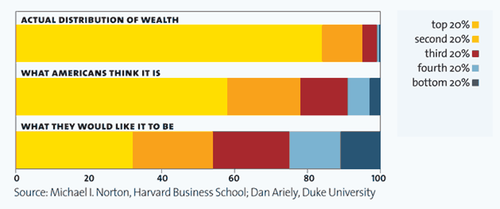
Mother Jones, It’s the Inequality, Stupid.

My attention was drawn to this by rc3‘s use of this chart:

Posted in Econ & Money | Comments Off on 11 Good Charts

Frank Pasquale Has Been Radicalized

One of the finest young(ish) legal scholars in America has been radicalized:

… consider the recent raise in federal taxes for the working poor, compared with Obama-GOP unwillingness to tax those in the top 0.1 or top 0.01% more. Households in the top 0.01% make over $27 million annually, on average. Those in the top 1% captured 67% of all income gains from 2002 to 2007. And yet budgets must be balanced on the backs of teachers and the working poor? Even as the scandal of tax havens, costing taxpayers $100 billion each year, goes unaddressed?

…. Bruce Ackerman has feared a “decline and fall of the American Republic,” given that escalating power struggles between the branches of government could leave “the military as a potential arbiter” (85). If the recent uprisings in North Africa teach anything, it is the critical role of army officials at moments of political turmoil.

As Ackerman has noted, in our military, “by 1996, 67% of the senior officer corps were Republicans, and only 7% were Democrats”—a pattern that had continued at least through 2003. Does anyone think that political skew would have no bearing in case another Bush v. Gore-type dispute degenerated into constitutional crisis? If one ever wanted to prove the insularity of the US academy, one could do worse than compare the gallons of ink spilled on viewpoint diversity on campus and the near-invisibility of the partisan skew of the actual guarantors of order in our society. Even demonstrated cases of political targeting by the US domestic intelligence apparatus have generated little outcry.

… those at the top push for a punitive austerity that promises little more than intensification of our current economic woes.

via Balkinization.

Posted in Econ & Money | 1 Comment

Obama’s Rope-a-Dope Strategy

This TalkLeft article articulates something I’ve been worrying about for a while. (See How To Lose An Argument In Order To, Maybe, Win An Election.) The basic idea is that Obama is playing to lose on the budget and the economy, and maybe even social security. The idea is to goad the Republicans into making outrageous demands by signaling preemptive surrender to them.

When the GOP seizes on the red meat being trailed in front of them and enacts their plans, it causes pain.   The plan then is to blame them for all the pain, collect lots of campaign money from Main Street, and get re-elected.

I hope this is wrong, but where is the evidence for that proposition?

The cheerfulish form of this theory is that if you have a weak hand all you can do is get the other side to overplay theirs in order to spark a reaction that will strengthen your hand; i.e. the is just the sort of long game that great n-dimensional chess players engage in.  But it’s not a cheerful process, and in a world of path-dependence lots can go wrong on the way.

Posted in 2012 Election, Econ & Money | 7 Comments

Where the Money Goes

Kevin Drum has a nice graphic on where federal spending goes.

I think most people don’t know this:

Note further that despite the 21% outlay, Social Security has for many years actually reduced the deficit, because the social security tax has been taking in more than social security pays out.   That said, this year may be different: due to the super recession, payroll taxes are down (few jobs) and involuntary retirements are up (ditto).  But the built-up surplus in the Social Security trust fund should cover it for a couple more decades at least; and the tax changes required to keep Social Security solvent until the age distribution bulge sorts out are pretty small. (Health care spending, aka Medicare, is a much harder story.)

Update: Here’s a really good CBO chart showing social security’s past and projected contribution to total federal spending, and thus to the deficit.

Posted in Econ & Money | 1 Comment